
Religious Studies
RS is like an iceberg. As you unpack ideas, you come to understand deeper meaning.
- Year 9 Pupil
Religious Studies Curriculum Intent Statement
Our Religious Studies curriculum aims to develop thoughtful, informed, and respectful learners who can engage critically with questions of meaning, identity, and morality. Through an ambitious and inclusive programme, we ensure that every student:
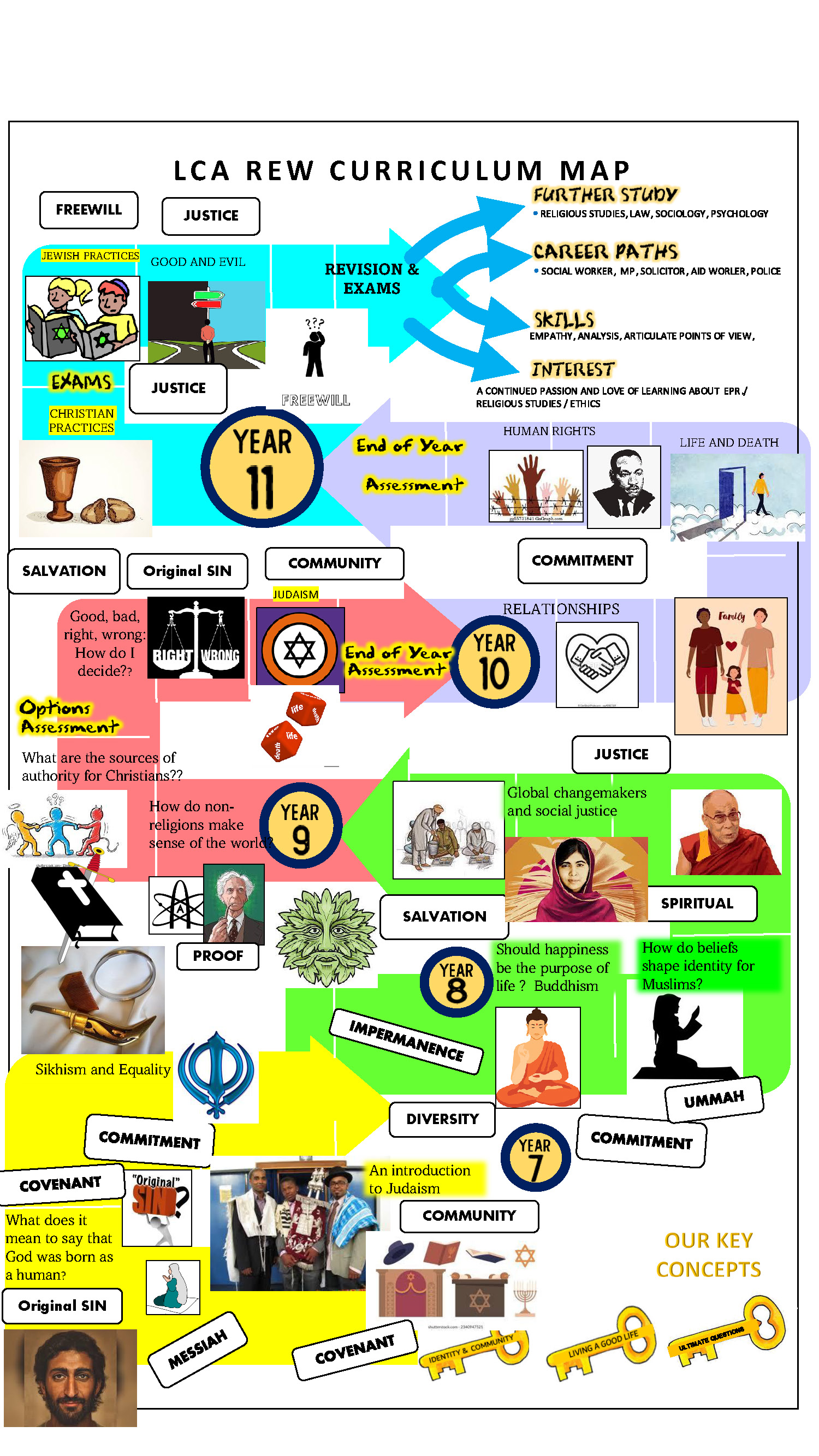
- Explores ultimate questions: Students consider profound questions about life, purpose, and existence—“Is happiness the purpose of life?”, “What happens after death?”, and “What does it mean to live a good life?”. These enquiries encourage deep thinking and personal reflection.
- Understands diverse beliefs and practices: Our curriculum introduces students to major world religions and non-religious worldviews, fostering cultural understanding and respect. From Jewish identity and Sikh traditions to Islamic beliefs and Christian ethics, students learn how beliefs shape lives and communities.
- Develops moral and ethical reasoning: Students examine concepts of right and wrong through religious and secular lenses, exploring ethical theories such as utilitarianism and situation ethics alongside religious teachings. This equips them to make informed decisions in a complex world.
- Connects beliefs to identity and community: We explore how faith and worldview influence identity, relationships, and belonging. Topics such as “How do beliefs shape identity for Jews?” and “How does religion influence individual changemakers?” highlight the role of religion in personal and social life.
- Engages with contemporary issues: Students consider religion’s role in society today—its influence on social justice, equality, and global challenges. Through case studies of figures like Malala Yousafzai and Afroz Shah, students see how beliefs inspire action.
- Prepares for life in modern Britain and beyond: Religious Studies promotes dialogue, empathy, and critical thinking—skills essential for active citizenship in a diverse society. Students learn to respect different perspectives while forming their own reasoned views.
- Links to SMSC, British Values, and Diversity
- Spiritual: Students reflect on ultimate questions, meaning, and purpose, exploring beliefs about life, death, and morality.
- Moral: Ethical discussions encourage students to consider right and wrong, justice, and responsibility.
- Social: Collaborative enquiry and debate develop respect for others and understanding of community.
- Cultural: Students learn about diverse traditions, festivals, and practices, promoting appreciation of global cultures.
British Values:
- Democracy: Students engage in debate and learn to respect differing opinions.
- Rule of Law: Exploration of religious laws and secular legal systems fosters understanding of justice.
- Individual Liberty: Students develop their own views while respecting others’ rights.
- Mutual Respect & Tolerance: Learning about diverse faiths and worldviews promotes harmony in a pluralistic society.
Diversity:
-
Our curriculum celebrates diversity by studying multiple religions and non-religious perspectives, challenging stereotypes, and promoting equality. Visits to places of worship and engagement with speakers from varied backgrounds enrich understanding.
Curriculum Pathways
Additional Opportunities Beyond the Classroom
- Visits to diverse religious places of worship